

We have been making our way through the Genesis account of the lives of Abram (Abraham) and Sarai (Sarah) in Genesis 16-21. We have discovered that even in the Bible human families are complicated and people are fraught with human frailty and some terrible behaviour. What are we to do with these Biblical stories and how do we understand them in light of our faith today?
This week we have heard how Abraham and Sarah had slaves and used one of them, Hagar, to provide them with a child. After Ismael was born, (and Sarah’s own biological child Isaac) jealousy arose and Abraham and Sarah turned Hagar out in to the wilderness where she had to rely on God. Slavery, abuse and neglect in the Bible: What on earth are we to make of this today? Hagar is so fearful she believes her child might die. It is a terrible story and measured by our own standards it is difficult to understand. It is therefore important to consider the historical context.
Abraham and Sarah lived in a world shaped by Babylonian law and custom, including practices where a slave woman could bear children on behalf of her mistress. The Code of Hammurabi (Law 144), written centuries before Abraham, shows that this arrangement was normalised. Sarah’s idea to give Hagar to Abraham was not original, but a culturally accepted solution to infertility. That does not solve the problem of course: a practice may be common and legal, but still unjust. So how do we deal with Bible stories like this?
The Bible often recounts the lives of people who behave in ways that are contrary to God’s purposes. When God creates humans, he does so out of love, and for love to be love, there must always be a freedom to choose to be in relationship. The cost of freedom is the possibility that people will make some terrible decisions and Abraham certainly does that. The consequences are tragic and there is much sadness. It is certainly a reminder of the need to consider our actions carefully and to measure them against teaching of Jesus to love God and love our neighbour as ourselves.
But within the Genesis chapters themselves we can find a contrast between the way Abraham and Sarah treat others and the way God treats us.
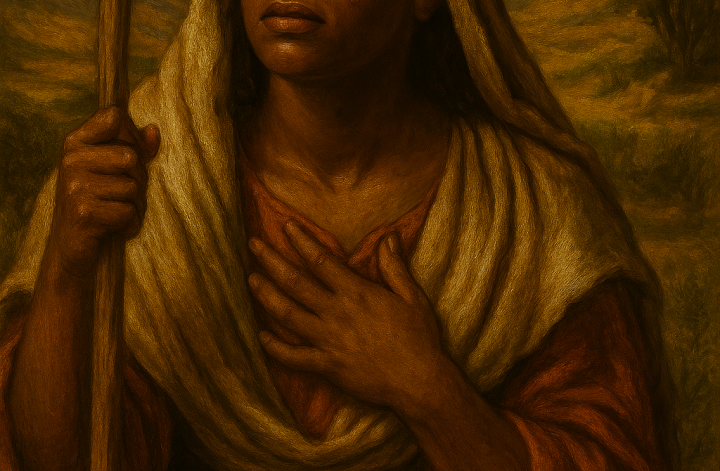
In the desert’s bareness, God visits Hagar. Unlike Abraham, God addresses Hagar by name. God recognises her as a person and not as an object to fulfil his own desires. Unlike Sarah and Abraham, God invites Hagar to talk, God listens to her experience and validates it. He names her and sees her. Unlike Sarah and Abraham who dominate and plunder Hagar, God blesses her. Indeed, God’s blessing upon Hagar is similar to the Abrahamic blessing: “I will increase your descendants so much that they will be too numerous to count” (v.10). God then names the child in Hagar’s womb Ishmael—“God hears”—emphasizing, “the LORD has heard of your misery” (v.11). God sees, hears, validates, and enters into Hagar’s sufferings. These are divine acts of liberation and they are model to us as well.